Managing GHS compliance in a lab or warehouse requires more than just the right software—it demands a printer capable of producing chemical-resistant, high-contrast labels. If label information is inaccurate, or if chemical or container labels fade, peel, or degrade during transport or handling, businesses risk failing compliance audits.
If you are looking for the most reliable GHS label printers for 2026, here are our top operational picks:
- • iDPRT iF4: Best for entry-level GHS labeling and low-to-mid volume applications
- • iDPRT iX4P: Best for industrial batch printing and automated labeling workflows
- • iDPRT iX6P: Best for wide-format chemical and hazardous waste labels, and large container applications
This guide outlines GHS labeling requirements and helps you choose the right printer based on your application, label size, and production needs.
What Is a GHS Compliant Label? Key Elements and Requirements
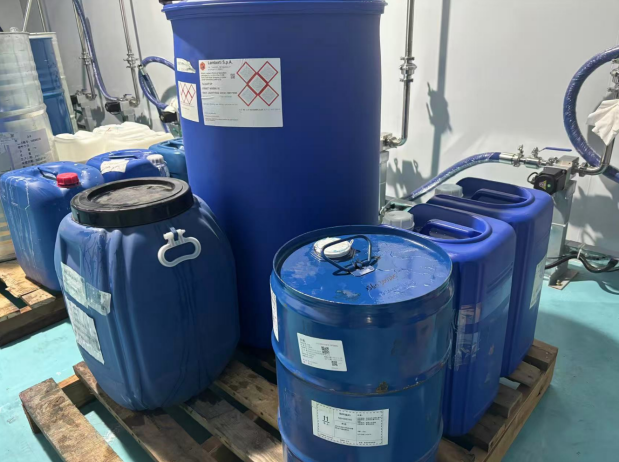
Under the UN GHS framework, chemical labels follow a standardized hazard communication structure. Shipped hazardous chemical containers may range from 50 ml laboratory vials to 200 L industrial drums.
In most cases, their GHS-aligned labels include six core elements, though exact requirements may vary by jurisdiction, product classification, and application:
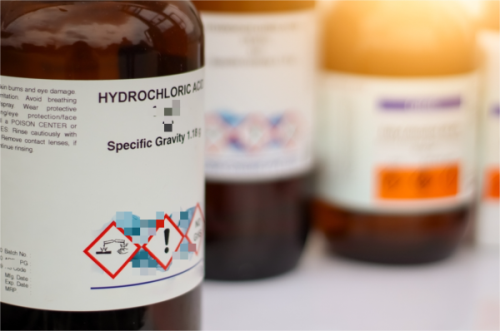
- Product Identifier — The specific chemical name or hazardous ingredient identity
- Signal Word — Either “Danger” (for severe hazards) or “Warning” (for less severe risks)
- GHS Pictograms: Red-bordered diamonds symbolizing specific hazards.
- Hazard Statements: Standardized phrases describing the nature of the hazard.
- Precautionary Statements — Instructions on safe handling, storage, and disposal
- Supplier Identification — Contact details of the manufacturer or importer
Together, these elements form a globally harmonized system. They ensure hazard information is communicated clearly and consistently across different industries.
Common applications include:
- ● Chemical manufacturing
- ● Pharmaceuticals
- ● Industrial cleaning
- ● Hazardous materials logistics
The “Purple Book” defines label content, but durability depends on the application.
For example, BS5609 is typically relevant for chemical drums and hazardous goods shipped by sea, rather than every internal GHS label. In marine transport scenarios, BS5609-tested labels are designed to withstand harsh conditions such as extended saltwater exposure while maintaining adhesion and readability.
What Is Required for a GHS Compliant Label Printer
In industrial environments, a GHS compliant label printer must consistently produce labels that remain readable, intact, and regulation-compliant throughout the entire lifecycle of a chemical product.
In real industrial environments, labels must survive:
- Chemical exposure (solvents, acids, oils)
- Outdoor conditions (UV, rain, humidity)
- Friction & handling (transport, stacking, abrasion)
- Long storage cycles (months or even years)
Minimum technical requirements you should look for:
High print resolution (typically 300–600 dpi minimum)
→ Ensures hazard pictograms and text remain sharp
Note: 203 dpi can be suitable for larger, simpler labels; 300–600 dpi is recommended for smaller text, barcodes, or dense GHS layouts.
Material compatibility
→ PET, PVC, or other synthetic labels (paper won''t survive)
Durability performance
- ● Chemical-resistant
- ● Waterproof
- ● Smudge-proof
Support for compliance workflows
- ● Variable data printing (batch, barcode, hazard statements)
- ● Integration with SDS/MSDS systems
Thermal Transfer vs Color Inkjet for GHS Label Printing
When selecting a GHS label printer, you''ll primarily choose between two technologies: thermal transfer and color inkjet. But which one is the right fit for your real-world operations? Let''s look at the facts.
The Industrial Standard — Thermal Transfer (Pre-printed Workflow)
Thermal transfer remains the dominant solution for high-volume GHS labeling. Because these printers are typically monochrome, they rely on a "Pre-printed + Overprinting" strategy that is both cost-effective and ultra-durable.
How it Works:
You use labels where the red GHS diamond borders are already professionally pre-printed. The thermal transfer printer (like the iDPRT iX4P) then imprints black pictograms and variable data.
Why it's widely used:
By fusing resin ribbon into synthetic materials such as PET or PVC , it creates a bond that is nearly impervious to chemicals and abrasion.
Operational Example:
For BS5609 compliance, a bulk chemical manufacturer combines thermal transfer with pre-printed stock. Their labels survive 90 days in saltwater, achieving high durability while significantly reducing per-label costs compared to inkjet.
Best For: High-volume production, harsh industrial environments, and long-term storage.
The Agile Alternative — Color Inkjet (On-Demand Workflow)
Color inkjet printers are gaining traction in facilities that prioritize flexibility and vivid visual communication. They use CMYK pigment inks to produce full-color chemical labels in a single pass, including the red GHS elements, branding, and multilingual content.
How it Works:
You start with blank label stock. The printer generates the entire design—pictograms, logos, and text—simultaneously.
Why companies choose them:
There is no need to manage an inventory of different pre-printed labels. If a regulation changes or you add a new SKU, you simply update the digital file.
The Trade-offs:
While convenient, liquid ink can be more sensitive to environmental stress. Additionally, the Total Cost of Ownership (TCO) is higher due to ink consumption and the need for specialized inkjet-coated materials.
Best For: Small-to-medium batches, companies with hundreds of SKUs, and premium branding requirements.
| Feature | Thermal Transfer | Color Inkjet |
|---|---|---|
| Durability | ⭐⭐⭐⭐⭐ | ⭐⭐⭐⭐ |
| Color capability | Limited | Full color |
| Cost (long-term) | Lower | Higher |
| Flexibility | Medium | High |
| Best use case | Bulk Industrial / Compliance-first | Multi-SKU / Premium Branding / on-demand |
Do You Need GHS Label Printing Software?
Short answer: Yes—if you want to scale or stay compliant.
In many small setups, teams start with just a printer and a basic label template. That may work for a handful of products—but it quickly becomes difficult to manage as operations grow.
The issue isn’t printing—it’s keeping label data accurate and consistent with SDS information.
Where software makes a difference
GHS labels rely on data that changes over time:
- • hazard classifications
- • regulatory updates
- • multilingual requirements
Manually copying this information into labels increases the risk of errors and inconsistencies.
With labeling software, this process becomes automated:
- • data can be pulled directly from SDS sources
- • label formats stay standardized
- • updates apply across all labels at once
Best GHS Label Printers for 2026 (Our Top Picks)
Every GHS labeling setup is different. The right solution depends on your:
- • industry and application
- • chemical label size and material
- • daily print volume
- • compliance requirements
- • level of automation required
Based on real-world use cases, here are three recommended thermal transfer printer options—from entry-level to industrial GHS labeling operations.
iDPRT iF4 — Best for Entry-Level GHS Compliance & Standard Labeling
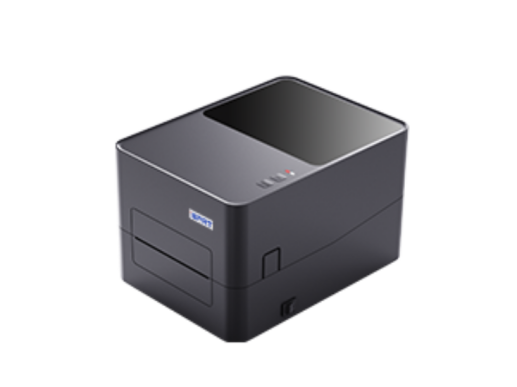
For many businesses, labs and universities, GHS labeling starts with relatively straightforward requirements: standard label sizes, moderate volumes, and basic compliance needs.
A compact desktop solution like the iF4 fits naturally into this stage. This 4-inch barcode printer can handle chemical, laboratory, and other compliance labeling tasks at low to mid volumes, helping businesses meet regulatory requirements.
Best for:
- • Small chemical businesses
- • University, labs and compliance startups
- • Warehousing and inventory labeling
Why it stands out
- • Compact desktop design for space-efficient deployment
- • 203 / 300 dpi resolution for clear GHS symbols and signal words
- • Supports label widths from 1" to 4.64"
- • Multi-language printer emulation (ZPL/TSPL/DPL)
- • Reliable sensor system ensures stable and accurate printing
Bottom line: The iDPRT iF4 is best suited for teams that need a reliable, cost-effective starting point for GHS labeling.
iDPRT iX4P — Best for Industrial Batch Printing & Automated Workflows
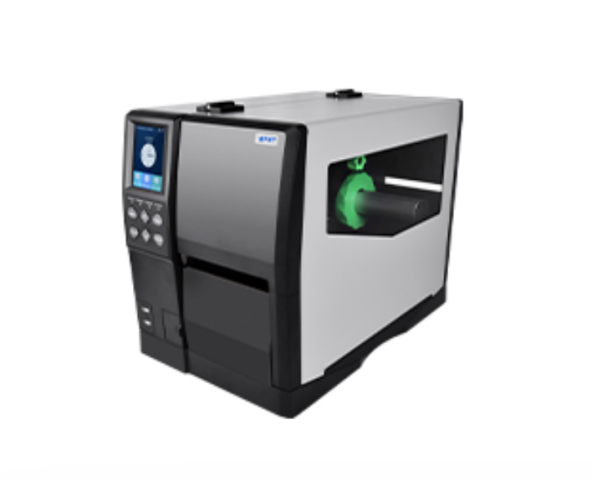
In high-volume environments, the biggest risk is not GHS label printing—it''s inconsistency and downtime.
The iDPRT iX4P Industrial Barcode Printer excels at high-speed, stable batch overprinting of black pictograms, hazard statements, and variable data onto labels with pre-printed GHS elements. It delivers consistent output and durability required for demanding chemical labeling environments.
Best for:
- • Large-scale chemical production, such as high-speed bottling, drum filling, and bulk packaging lines
- • Pharmaceutical manufacturing environments
- • Secondary container and laboratory labeling
- • Automated labeling lines, with integration into conveyor systems and applicators
Why it stands out
- • Up to 8 ips printing speed (300 dpi) for high-volume, high-precision overprinting of compliant chemical labels
- • 3.5-inch color display for intuitive operation
- • 256MB memory for complex labels, including symbols, signal words, and hazard statements
- • Automation-ready (peel, cut, rewind)
- • Multiple connectivity options (Wi-Fi, GPIO) for seamless integration into production systems
Bottom line: The iX4P is ideal when your operation moves from manual labeling to scalable, automated production.
iDPRT iX6P — Best for Wide-Format GHS Labels & Industrial Containers
Drums and IBC (Intermediate Bulk Container) often require larger labels like 6-inch hazardous Waste Labelwith more information—and that’s where standard 4-inch label printers fall short.
The iDPRT iX6P is a 6-inch wide-format industrial barcode printer that supports larger GHS label formats. It provides sufficient print width for full pictograms, multilingual safety data, and regulatory content required for international shipping.
Best for:
- • Chemical drum and container labeling, such as 55-gallon drums or intermediate bulk containers
- • Export and hazardous goods shipping
- • Applications requiring 6-inch wide synthetic labels for GHS compliance
Why it stands out
- • Up to 12 ips printing speed (203 dpi) for industrial efficiency
- • Wide print capability (up to 168 mm) for large-format labels
- • Industrial material compatibility including PET, PVC, and BOPP synthetic labels
- • 450 m ribbon capacity for extended production runs
Bottom line: The iX6P is a specialized solution for wide-format hazardous goods and GHS labeling applications.
GHS Label Printer Comparison
| Feature | iDPRT iF4 | iDPRT iX4P | iDPRT iX6P |
|---|---|---|---|
| Printer Type | Desktop | Industrial | Wide-format Industrial |
| Printing Method | Thermal Transfer / Direct Thermal | Thermal Transfer / Direct Thermal | Thermal Transfer / Direct Thermal |
| Resolution & Speed | 203 dpi (14 ips) / 300 dpi (8 ips) | 203 dpi (14 ips) / 300 dpi (8 ips) / 600 dpi (4 ips) | 203 dpi (12 ips) / 300 dpi (10 ips) |
| Max Print Width | 4-inch class | 104 mm | 168 mm |
| Ribbon Length | 300 m | 450 m / 600 m (optional) | 450 m |
| Connectivity | USB, Ethernet, optional BT / Wi-Fi | USB, USB Host, Ethernet, RS232, Parallel, optional Bluetooth / Wi-Fi / GPIO | USB, USB Host, Ethernet, RS232, Parallel, optional Bluetooth / Wi-Fi / GPIO |
| Best Use Case | Entry-level compliance, low to mid volumes | Batch production & automation | Large labels & containers |
Looking for a Reliable GHS Label Printer?
iDPRT is a professional provider of barcode and label printing solutions, specializing in AIDC (Auto Identification and Data Collection) technologies. Our product portfolio includes desktop, industrial, mobile, and wide-format barcode printers, along with supporting hardware and software systems. Today, iDPRT printers are widely used in chemical manufacturing, pharmaceuticals, laboratories, and hazardous goods logistics—supporting reliable and compliant GHS labeling across different environments.
Why choose iDPRT for GHS label printing?
- ✔ Full product range — from entry-level desktop models to industrial and wide-format printers
- ✔ Flexible configurations — multiple resolutions, speeds, and interface options to match different workflows
- ✔ Proven reliability — stable performance in chemical, logistics, and manufacturing environments
- ✔ Compatibility — supports synthetic label materials and integrates with existing labeling systems
FAQs About GHS Label Printing and Printers
1. Can thermal transfer printers print GHS labels?
Yes. Thermal transfer printers are the most widely used solution for GHS labeling. In most industrial applications, they are used with pre-printed labels (for red pictograms), while the printer adds black text, symbols, and variable data.
2. What materials are best for GHS labels?
GHS labels are typically printed on synthetic materials to ensure durability, such as: PET, PVC, BOPP. These materials resist chemicals, moisture, and abrasion in harsh environments.
3. Is BS5609 certification required for GHS labels?
Not always. BS5609 is mainly relevant for hazardous goods and chemical drums shipped by sea, especially where IMDG-related marine durability requirements apply. For long-term outdoor or harsh industrial exposure, BS5609-grade materials may be beneficial, but BS5609 is not automatically required for every internal GHS label.
4. Do GHS labels need to be printed in color?
Yes—for hazard pictograms. However, this does not always require a full-color printer. Many companies use pre-printed color labels combined with thermal transfer printing to balance cost and durability.